
No products in the cart.
Complete Guide to Teflon Gaskets: 15 Essential Facts Every Builder Should Know | VR Motorsports
Teflon Gaskets Explained
Teflon Gaskets are high-performance sealing components designed to create a reliable seal between mating surfaces while withstanding high temperatures, pressure variations, and exposure to automotive fluids. Manufactured from PTFE (Polytetrafluoroethylene), Teflon Gaskets are widely used in performance engines because of their excellent chemical resistance, low friction properties, and outstanding thermal stability.
In the automotive performance industry, Teflon Gaskets are commonly installed between intake manifolds, throttle body adapters, spacers, and other engine components where dependable sealing and thermal insulation are important. By helping reduce heat transfer and maintaining a consistent seal, Teflon Gaskets contribute to reliable engine operation under both street and motorsport conditions.
At VR Motorsports, our Teflon Gaskets are precision manufactured to deliver accurate fitment, excellent sealing performance, and long-term durability. Whether you’re upgrading an intake manifold, installing a throttle body adapter, or rebuilding a performance engine, choosing a quality Teflon Gasket helps ensure dependable performance and lasting reliability.
This complete guide explains everything you need to know about Teflon Gaskets, including how they work, material properties, performance advantages, installation procedures, maintenance, and how to choose the correct gasket for your application.
What Are Teflon Gaskets?
A Teflon Gasket is a sealing component manufactured from PTFE (Polytetrafluoroethylene), a high-performance engineering material recognised for its exceptional resistance to heat, chemicals, moisture, and wear. Unlike conventional paper, rubber, or fibre gaskets, Teflon Gaskets maintain their sealing properties across a broad range of operating conditions while resisting deterioration caused by fuel, oil, coolant, and other automotive fluids.
Because PTFE has a naturally low coefficient of friction, Teflon Gaskets also help simplify installation and removal while maintaining a dependable seal between engine components. Their excellent thermal stability makes them particularly suitable for high-performance applications where intake temperatures and engine bay heat can place additional demands on conventional gasket materials.
Why Teflon Gaskets Matter
A gasket may appear to be a simple component, but its role is critical to overall engine reliability. A poorly sealed intake manifold or throttle body can lead to vacuum leaks, unstable idle, reduced engine efficiency, and inconsistent performance.
Teflon Gaskets provide a reliable sealing solution while also helping reduce heat transfer between engine components. Their excellent resistance to compression, chemical attack, and high operating temperatures makes them an excellent choice for enthusiasts building naturally aspirated, turbocharged, and motorsport engines.
Beyond sealing performance, the long service life of Teflon Gaskets makes them a practical upgrade for enthusiasts seeking dependable performance with reduced maintenance requirements.
15 Essential Facts Every Builder Should Know About Teflon Gaskets
1. Teflon Gaskets Are Made from PTFE
Teflon Gaskets are manufactured from Polytetrafluoroethylene (PTFE), an advanced engineering material known for its excellent heat resistance, chemical stability, and low-friction properties. These characteristics make PTFE one of the most reliable gasket materials for demanding automotive applications.
2. Excellent Heat Resistance
One of the biggest advantages of Teflon Gaskets is their ability to withstand high operating temperatures without losing their sealing properties. This makes them well suited for intake systems and other engine components exposed to continuous heat.
3. Outstanding Chemical Resistance
Teflon Gaskets resist degradation when exposed to petrol, engine oil, coolant, and many automotive chemicals. This chemical resistance contributes to longer service life compared to many conventional gasket materials.
4. Helps Maintain a Reliable Seal
A properly installed Teflon Gasket creates a dependable seal between mating surfaces, helping prevent vacuum leaks, air leaks, and fluid leakage that can negatively affect engine performance.
5. Suitable for Naturally Aspirated and Turbocharged Engines
Whether installed on a naturally aspirated engine or a high-boost turbocharged application, Teflon Gaskets provide reliable sealing under demanding operating conditions.
6. Supports Stable Engine Performance
A secure seal created by Teflon Gaskets helps maintain accurate airflow and stable engine operation, allowing the engine management system to function as intended.
7. Low Friction Makes Installation Easier
The naturally low coefficient of friction found in PTFE allows Teflon Gaskets to seat smoothly between components while simplifying installation and future removal.
8. Resistant to Moisture and Corrosion
Unlike some conventional gasket materials, Teflon Gaskets do not absorb moisture and are highly resistant to corrosion, making them suitable for long-term automotive use.
9. Maintains Dimensional Stability
High-quality Teflon Gaskets maintain their shape under normal operating conditions, helping preserve sealing performance even after repeated heat cycles.
10. Precision Manufacturing Improves Fitment
Premium Teflon Gaskets are precision machined or CNC cut to ensure accurate port alignment, consistent thickness, and dependable sealing performance.
11. Commonly Used with Performance Intake Systems
Many enthusiasts install Teflon Gaskets alongside billet intake manifolds, throttle body adapters, and intake spacers to achieve reliable sealing and support consistent airflow.
12. Long Service Life
Because PTFE is highly resistant to wear, heat, and chemicals, Teflon Gaskets often provide a longer service life than many traditional gasket materials when installed correctly.
13. Suitable for Multiple Automotive Applications
Beyond intake systems, Teflon Gaskets are used in various automotive applications requiring dependable sealing and resistance to heat and chemicals.
14. Require Proper Installation
Even the highest-quality Teflon Gasket depends on clean sealing surfaces and correct installation procedures to achieve reliable long-term performance.
15. A Reliable Upgrade for Performance Builds
Whether replacing a worn gasket or upgrading a modified engine, Teflon Gaskets provide dependable sealing, excellent durability, and reliable performance for both street and motorsport vehicles.
Types of Teflon Gaskets
Although all Teflon Gaskets are manufactured using PTFE-based materials, different designs are developed to suit various engine components and performance applications. Selecting the correct gasket helps ensure reliable sealing and proper fitment.
Intake Manifold Teflon Gaskets
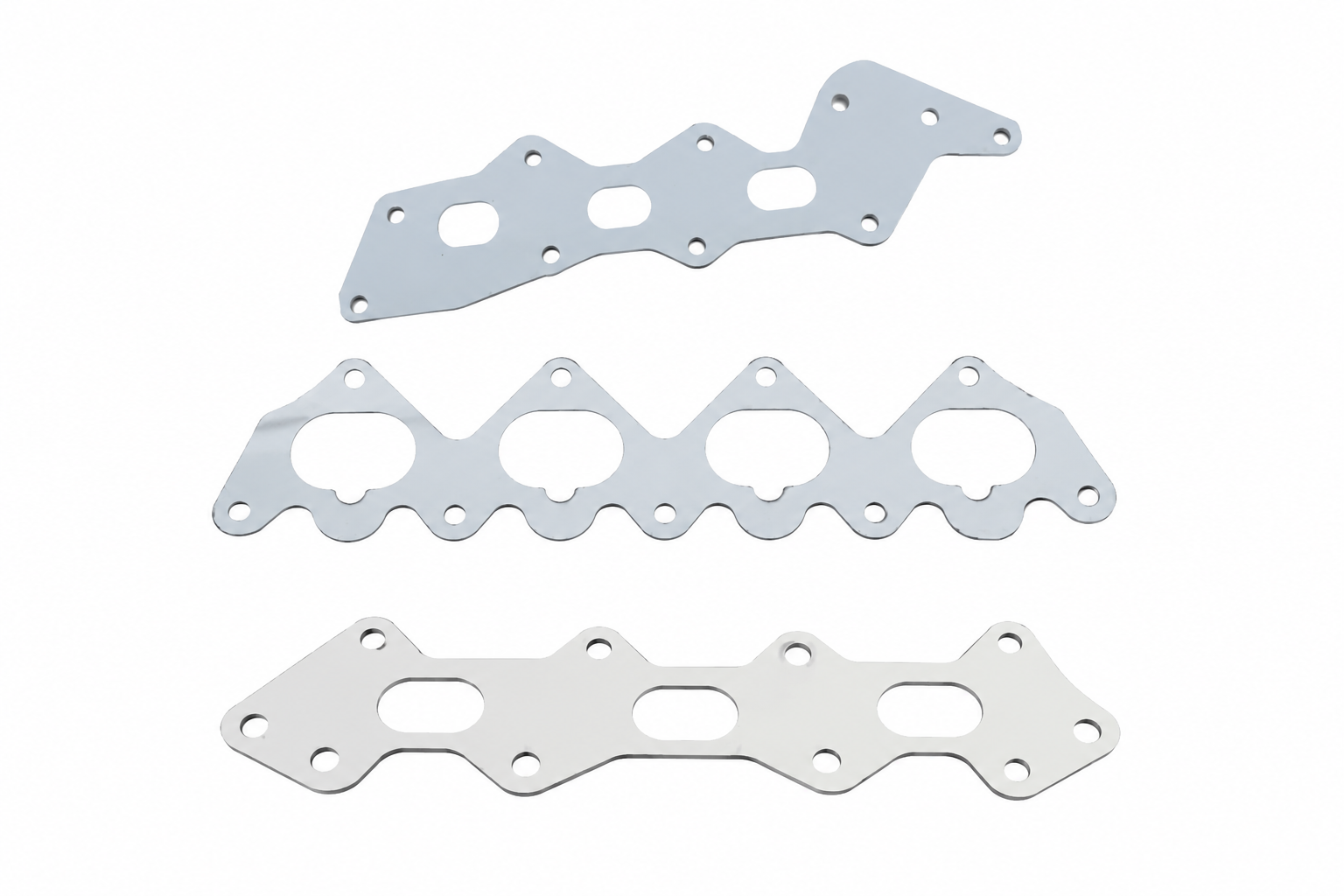
Intake manifold Teflon Gaskets are designed to seal the connection between the intake manifold and cylinder head while helping maintain consistent airflow and minimise the risk of vacuum leaks.
Throttle Body Teflon Gaskets
Throttle body Teflon Gaskets create a dependable seal between the throttle body and intake manifold or adapter plate. Proper sealing helps maintain accurate airflow entering the engine.
Adapter Plate Teflon Gaskets
Many aftermarket intake adapters and throttle body adapters use Teflon Gaskets to ensure reliable sealing between custom-machined components while maintaining compatibility with modified induction systems.
Teflon Gaskets vs Conventional Gaskets
One of the most common questions enthusiasts ask is whether Teflon Gaskets offer meaningful advantages over traditional gasket materials.
Conventional gaskets are commonly manufactured from paper, fibre, cork, or rubber compounds. While these materials perform well in many standard automotive applications, they may become less effective when exposed to prolonged heat, aggressive automotive fluids, or repeated thermal cycling.
Teflon Gaskets, by comparison, provide superior resistance to heat, chemicals, and moisture while maintaining stable sealing performance over an extended service life. Their low-friction properties also simplify installation and removal without compromising sealing capability.
For enthusiasts building naturally aspirated, turbocharged, or motorsport engines, Teflon Gaskets provide a dependable sealing solution capable of supporting demanding operating conditions while reducing long-term maintenance requirements.
Materials Used in Teflon Gaskets
The material used to manufacture a Teflon Gasket has a direct influence on its sealing performance, heat resistance, durability, and long-term reliability. Since gaskets are exposed to continuous temperature changes, engine vibration, and automotive fluids, selecting the appropriate material is essential for dependable performance.
PTFE (Polytetrafluoroethylene)
PTFE is the primary material used in premium Teflon Gaskets because of its exceptional resistance to heat, chemicals, and moisture. Unlike many conventional gasket materials, PTFE remains stable under demanding operating conditions while maintaining excellent sealing performance.
Its naturally low coefficient of friction also helps simplify installation and future removal without damaging the sealing surfaces.
Precision CNC-Cut Construction
High-quality Teflon Gaskets are precision CNC cut to ensure accurate port alignment, consistent thickness, and reliable sealing. Accurate manufacturing tolerances help minimise installation issues while ensuring every gasket matches the intended engine application.
High-Density PTFE Formulation
Many performance Teflon Gaskets use high-density PTFE material to improve structural stability under repeated heat cycles and engine vibration. This helps maintain gasket integrity throughout long-term service while reducing the risk of compression failure.
How to Choose the Right Teflon Gasket
Choosing the correct Teflon Gasket involves more than matching the engine model. The gasket must also be compatible with the intended component, operating temperature, and overall engine configuration.
Before purchasing a Teflon Gasket, consider the following:
- Verify compatibility with your engine platform.
- Ensure the gasket matches the intake manifold or throttle body.
- Confirm port alignment and gasket thickness.
- Choose high-quality PTFE material.
- Select precision CNC-cut gaskets for accurate fitment.
- Inspect sealing surfaces before installation.
- Purchase from a manufacturer with proven engineering standards.
A properly selected Teflon Gasket helps maintain dependable sealing, supports efficient airflow, and contributes to long-term engine reliability.
At VR Motorsports, every Teflon Gasket is manufactured with precision to deliver accurate fitment, excellent sealing performance, and dependable durability for performance enthusiasts.
Installing Teflon Gaskets
Proper installation is essential for achieving the full sealing performance of a Teflon Gasket. Even a premium gasket cannot compensate for damaged sealing surfaces or incorrect installation procedures.
Before installation, thoroughly clean all mating surfaces to remove old gasket material, oil residue, dirt, and corrosion. Inspect both sealing surfaces for scratches, distortion, or damage that could affect gasket performance.
Position the Teflon Gasket carefully, ensuring all ports and bolt holes are correctly aligned before installing the intake manifold, throttle body, or adapter. Tighten all fasteners gradually using the manufacturer’s recommended torque sequence and specifications to apply even gasket compression.
After installation, inspect the engine for vacuum leaks, air leaks, or fluid leaks before returning the vehicle to normal operation.
Maintaining Teflon Gaskets
Although the gaskets requires virtually no direct maintenance, periodic inspection helps ensure the surrounding components continue providing reliable sealing.
During routine servicing, inspect intake manifolds, throttle bodies, adapter plates, and mounting hardware for signs of loosening, vacuum leaks, or fluid leakage. If engine components are removed for maintenance, inspect the gasket carefully before deciding whether replacement is necessary.
Maintaining clean sealing surfaces and following proper installation procedures will maximise the service life of both the gasket and surrounding engine components.
Common Mistakes to Avoid
Installing a Teflon Gasket is relatively simple, but several common mistakes can reduce sealing performance or create unnecessary reliability issues.
Common mistakes include:
- Installing the wrong gasket for the application.
- Reusing damaged or worn gaskets.
- Failing to clean sealing surfaces.
- Over-tightening mounting hardware.
- Ignoring recommended torque specifications.
- Installing components with damaged mating surfaces.
- Purchasing low-quality aftermarket gaskets with inconsistent dimensions.
Avoiding these common issues helps ensure dependable sealing and long-term engine reliability.
Frequently Asked Questions
What is a Teflon Gasket?
A gasket is a precision sealing component manufactured from PTFE (Polytetrafluoroethylene) that provides excellent resistance to heat, chemicals, and moisture while maintaining reliable sealing performance.
Are Teflon Gaskets better than conventional gaskets?
Teflon Gaskets generally provide superior heat resistance, chemical resistance, durability, and long-term sealing performance compared with many paper, fibre, or rubber gasket materials. The best choice depends on the specific application.
Do Teflon Gaskets improve engine performance?
A gasket does not directly increase horsepower. Its primary function is to provide reliable sealing and help maintain efficient airflow by preventing leaks. Overall engine performance depends on the complete engine combination and tuning.
Can Teflon Gaskets be reused?
Whether a gasket can be reused depends on its condition and the manufacturer’s recommendations. It should always be inspected carefully for damage, deformation, or wear before reinstallation.
Why choose VR Motorsports Teflon Gaskets?
VR Motorsports gaskets are precision manufactured using premium PTFE material to provide excellent fitment, dependable sealing performance, outstanding durability, and long-term reliability for performance engines.
Why Choose VR Motorsports?
At VR Motorsports, we understand that even small components play a major role in overall engine reliability. Every Teflon Gasket is precision manufactured to deliver accurate fitment, excellent sealing performance, and dependable durability under demanding operating conditions.
Our gaskets are trusted by enthusiasts, workshops, and professional engine builders because they combine premium PTFE materials with consistent manufacturing quality. Whether you’re installing a billet intake manifold, throttle body adapter, or other induction component, VR Motorsports provides sealing solutions engineered for long-term performance.
Conclusion
A high-quality Teflon Gasket is an essential component in any performance engine, providing dependable sealing while resisting heat, chemicals, and long-term wear. By maintaining a reliable seal between critical engine components, gaskets help support stable engine operation, minimise maintenance, and contribute to overall reliability.
Whether you’re upgrading an intake system, replacing a worn gasket, or completing a full engine build, investing in a precision-manufactured gaskets ensures long-lasting performance and peace of mind. With premium PTFE materials, accurate manufacturing, and proven reliability, VR Motorsports Teflon Gaskets are designed to meet the expectations of enthusiasts and professional builders alike.
Internal Resource
Browse our complete Teflon Gasket collection:
https://vracemotorsports.com/product-category/teflon-gaskets
External Resource
To learn more about sealing materials, PTFE properties, and automotive engineering principles, visit the Society of Automotive Engineers (SAE):